
Kitchen Cabinet Painting in Orange County
A homeowner's guide to painted cabinets that last: what the prep involves, why primer matters, and how to choose the right finish.
★★★★★5.0 on Google (6 reviews)Cabinets Aren't Walls
Cabinets get grabbed, bumped, splashed and scrubbed every day. Paint that works on a wall won't hold up on a cabinet door. A finish that lasts comes from three things: thorough prep, the right primer, and a hard, cabinet-grade enamel.
Skip any of them and you get peeling at the edges, stain bleeding through, or a finish that chips the first time a pot hits it. Here's what a quality cabinet job involves, so you know what to look for.
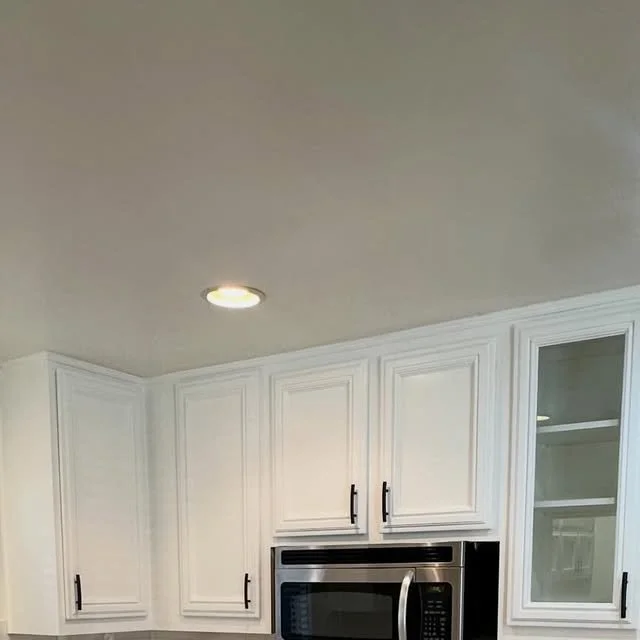
Why Prep Is Most of the Job
Cleaning & degreasing
Kitchen cabinets carry years of cooking grease and hand oils, often invisible. Paint won't bond to grease, so every surface needs a proper degreasing clean first.
Sanding & scuffing
Factory finishes are smooth and slick. Scuff-sanding gives primer something to grip. It's about adhesion, not stripping to bare wood.
Repairing dings
Dents, gouges and worn edges show more under fresh enamel, not less. Filling and sanding them smooth beforehand is what makes it look new.
Doors & hardware off
Removing doors, drawer fronts and hardware lets every edge get coated evenly and avoids paint on hinges and pulls. Labeling keeps everything going back where it belongs.
Why Primer Is Usually Required
Primer is often the difference between paint that lasts years and paint that peels in months.
- Bonding primers grip slick surfaces like factory lacquer, glossy older paint, laminate and thermofoil, where regular paint can scratch right off
- Stain-blocking primers stop wood tannins (common in oak, cherry and knotty pine) from bleeding through as yellow or brown spots, especially under white
- Oak grain shows through paint. If you want a smooth, grain-free look, it may need a grain filler before priming
- Primer also evens out repairs and color changes so the topcoat looks uniform
Paint Types & Sheens
Cabinet-grade enamels
Urethane-modified acrylics and waterborne alkyd-hybrid enamels level out smooth and cure hard, like the feel of factory cabinetry. They resist yellowing better than traditional oil paint.
Satin
The most popular choice. A soft, modern glow that hides small imperfections and fingerprints well and still wipes clean.
Semi-gloss
Shinier and a little tougher to clean. Great for a classic look, but it highlights every dent and brush mark, so prep has to be flawless.
Spray vs. brush
Spraying gives the smoothest, most factory-like finish. A quality brush-and-roll job can look great too, with a slight hand-finished texture. The best choice depends on your cabinets and your goals.
Dry Time Isn't Cure Time
Cabinet enamel feels dry to the touch within hours, but it keeps hardening for days to weeks. During that time the finish is softer than it will be.
- Be gentle for the first couple of weeks: avoid slamming doors and stacking heavy items on shelves
- Hold off on scrubbing; wipe with a soft cloth and mild soap
- Bumpers on doors and drawers help protect the finish long-term
- Wipe up spills and grease promptly, especially near the stove and sink
- Ask for leftover paint for easy touch-ups down the road
Paint, Reface or Replace?
Paint
Best when your cabinet boxes are solid and you like the layout. It changes the whole look of a kitchen for a fraction of the cost and time of new cabinets, with countertops left in place.
Reface
Worth considering if the boxes are sound but you want a different door style, like swapping raised panels for flat Shaker doors.
Replace
Makes sense when boxes are water-damaged, sagging or falling apart, or when you're changing the layout. Paint can't fix structural problems.
Painting also works well for bathroom vanities, laundry cabinets and built-ins. Not sure which fits your kitchen? Our team will take a look and give you an honest recommendation.
Common Questions
How long do painted cabinets last?
With proper prep, primer and a cabinet-grade enamel, painted cabinets can look great for many years. Most early failures trace back to skipped cleaning, sanding or priming.
Can you paint laminate or thermofoil cabinets?
Often, yes, with the right bonding primer. Peeling or bubbling thermofoil usually needs to be addressed or replaced first, so it's best to have them looked at.
Will the wood grain show through?
On open-grain woods like oak, yes, unless the grain is filled before priming. Some homeowners like the texture; others prefer a smooth look. It's your choice.
How long will my kitchen be out of commission?
It depends on the size of the kitchen and the finish method. Your estimate will lay out the timeline so you can plan around it.
What colors are popular right now?
Warm whites, soft greiges, deep navy and green, and two-tone kitchens with a darker island are all popular. We're happy to help you choose.
Do you offer free estimates?
Yes, always free and no-obligation. Call or text (714) 853-9700 or request one online.
Are you licensed and insured?
Yes. Centurion Painting, Inc. is a licensed, bonded and insured California contractor, CSLB #1148062. You can verify it at cslb.ca.gov.
Ready for a fresh coat? Let's get you a free estimate.
Tell us about your project and we'll call you back fast, usually within minutes during business hours. No pressure, no obligation.
Request a Free Estimate
Takes about 30 seconds.
Get My Free Cabinet Estimate →Mon–Fri 8 AM–5 PM · Sat 9 AM–3 PM
Licensed, Bonded & Insured · CSLB #1148062